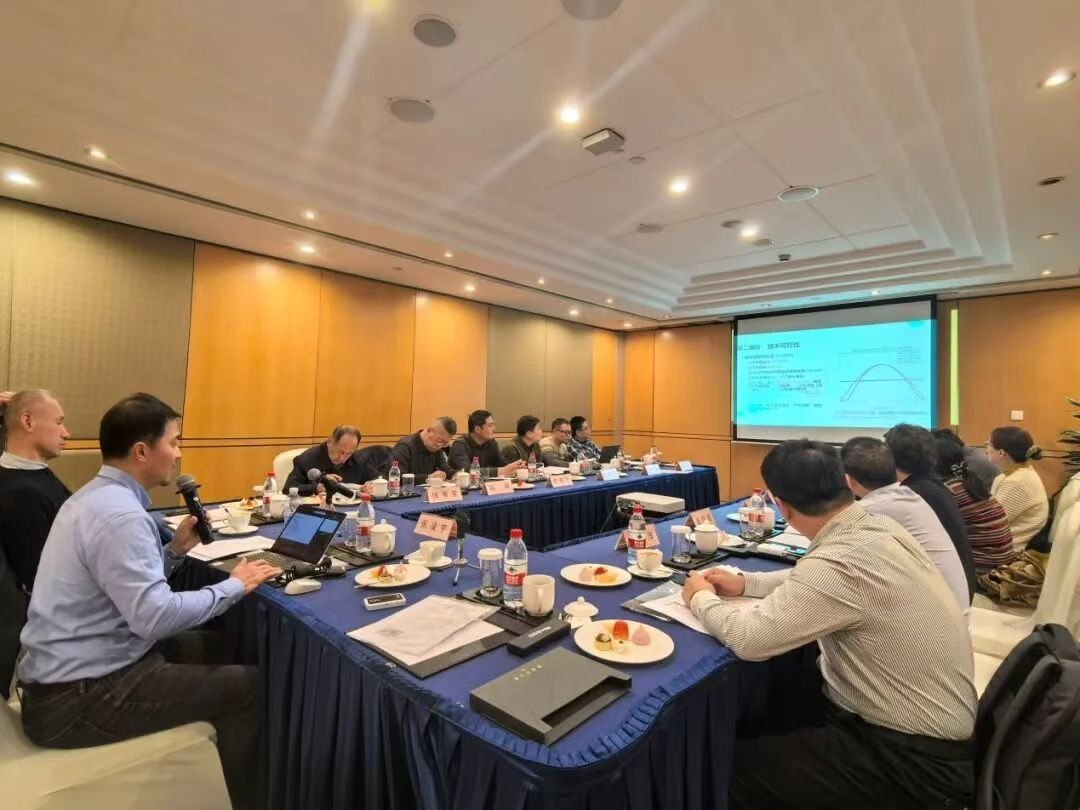
Recently, the "2025 Green Energy-Efficient High-Torque Transformer: Design Challenges, Innovative Solutions and Future Trends Seminar", jointly organized by the International Copper Association and enterprises such as Changta Group, was successfully held at the Jinjiang Hotel in Shanghai.
The meeting was organized by the International Copper Association. Experts from power supply authorities, industry associations, renowned universities, design institutes, and related enterprises gathered together. The main topics of discussion included the background of green and low-carbon policies, the technical feasibility of green (high-capacity) transformers, their application scenarios and social economic benefits, as well as the establishment of relevant standards.
1. Relevant policy background
The "Manufacturing Green and Low-Carbon Development Action Plan 2025-2027" issued by the State Council emphasizes the need to accelerate green technological innovation and the popularization of advanced green technologies. In March this year, the government work report of the State Council proposed a carbon footprint management system. The new green procurement mechanism of State Grid (2023) has clearly stipulated the equipment selection based on the concept of green, low-carbon and environmental protection. The introduction of these policies have brought unprecedented opportunities and challenges to the development of green transformers. As the main insulating material for open-type dry-type transformers, polyimide polymer composite materials have the advantages of withstanding high and low temperatures, corrosion resistance, salt fog resistance, radiation resistance, good flame retardancy, and high insulation grade (above H level). They well implement the concept of green and low-carbon. They do not encourage the equipment to operate at long-term overloading, but through enhanced design, make the transformers capable of coping with short-term, periodic or emergency load shocks, thereby allowing users to choose a more economically reasonable capacity at the initial investment. This can not only reduce the equipment purchase cost of users, but also reduce redundant investment in the power grid and improve the overall resource utilization efficiency.
2. Technical feasibility of green (high-capacity) transformers
To achieve safe and reliable high overload capacity, technical breakthroughs were made along three main paths, resulting in a variety of distinctive products. Path 1: Alter the core structure of the transformer. Replace the planar laminated core of the transformer with a three-dimensional rolled core. By optimizing the magnetic circuit and reducing the weight of the core, the no-load loss can be significantly decreased, thereby saving electrical energy.
Path 2: Innovation in transformer insulation materials. Replace the traditional epoxy resin insulation of open-type dry-type transformers with polyimide polymer composite materials. The high-temperature resistance of the material and the cylindrical coil structure will significantly enhance the overload capacity, allowing the transformer to operate at 130% overload without the need to turn on the fan for an entire year; furthermore, silicone rubber and other advanced elastic materials used as the main insulation in silicone rubber cast dry-type transformers, with their excellent high-temperature resistance, flame retardancy, environmental protection and recyclability features, significantly improve the short-term overload capacity and long-term operational safety.
Section 3: Innovation in Transformer Oil. Using natural esters (plant oils) instead of traditional mineral oil in transformers allows them to operate safely at higher temperature rises due to their higher ignition point and better compatibility with insulation materials, thereby extending the allowable overload time.
3. Application Scenarios and Social Economic Benefits
This seminar delved deeply into the potential applications of green (high-load) transformers in various fields.
Industrial sector: Taking the power supply system of a steel enterprise as an example, when one transformer fails, another transformer needs to take over and bear the entire load of the equipment.
Municipal sector: In water treatment plants and sewage treatment plants, during self-starting of the motors, during the rainy season when operating at full capacity, or when running with a single power source, there will be short-term peak loads.
Shipbuilding and large-scale shore power sector: Shipbuilding and large-scale shore power facilities often encounter issues of load fluctuations and capacity matching. These scenarios all have certain requirements for the short-term overload capacity of transformers.
In the field of civil buildings: Currently, the load rates of transformers in a large number of commercial buildings are generally low, resulting in the phenomenon of "a large horse pulling a small cart". In the renovation of existing buildings, if green (high-load) transformers are adopted, it is possible to achieve "capacity expansion" without expanding the distribution room or replacing the busbars, in order to cope with load growth or peak electricity consumption during extreme weather conditions.
Under the two-part electricity pricing policy for industrial and commercial use, the economic benefits are very significant. Using the common demand reduction-capacity reduction algorithm, for a 35kV voltage level, it is assumed that 2500kVA can be saved, resulting in a monthly electricity cost savings of 36,500 yuan.
4. Establishment of relevant standards
It is known that the "High Overload Capacity Transformer" technical standard formulated by China's power industry was first implemented on January 10, 2018, and its data was updated on January 6, 2021. This standard, which targets three-phase oil-immersed transformers with a capacity of 10kV and 30kVA to 500kVA, stipulates core indicators such as short-circuit bearing capacity, overload performance, and temperature rise limits. It fills the gap in domestic related technical standards. In 2023, the Gansu Electrical Engineering Technology Society released a supplementary group standard T/GES 001-2024, which further details product definitions, test methods, and transportation and storage requirements, and was officially implemented on October 26, 2023. Both of these two standards do not clearly stipulate the high load rate situation for higher voltage levels of dry-type or oil-immersed transformers or transformers using new insulation media. This has led to ambiguous product performance definitions in the market and a lack of standard basis for design and selection, becoming an important bottleneck restricting the standardized development of the industry. The experts present unanimously believe that it is urgent to incorporate high overload characteristics into a broader green transformer standard category. All parties need to work together to establish relevant group standards or industry standards, and when the conditions are ripe, establish national standards to remove design and selection obstacles.
5. Conclusion
This seminar calls for all parties to innovate their traditional concepts. In the current situation where transformer capacity design and selection are overly large and load rates are too low, resulting in significant energy waste, a green, low-carbon and environmentally friendly concept should be incorporated into the high-overload concept. The industry association should take the lead and jointly launch the standard formulation work. Projects in industrial parks, commercial buildings, and new energy power stations should be selected to promote local pilot projects. Technical exchanges should be continuously held to expand industry awareness. Deepening the cooperation among academia, industry and research can promote technological iteration and upgrading.
When standards, technologies, markets and policies work together, this technological innovation hidden in the substation will surely bring about significant economic and social benefits, and inject green energy into the process of high-quality development.

 EN
EN