 EN
EN
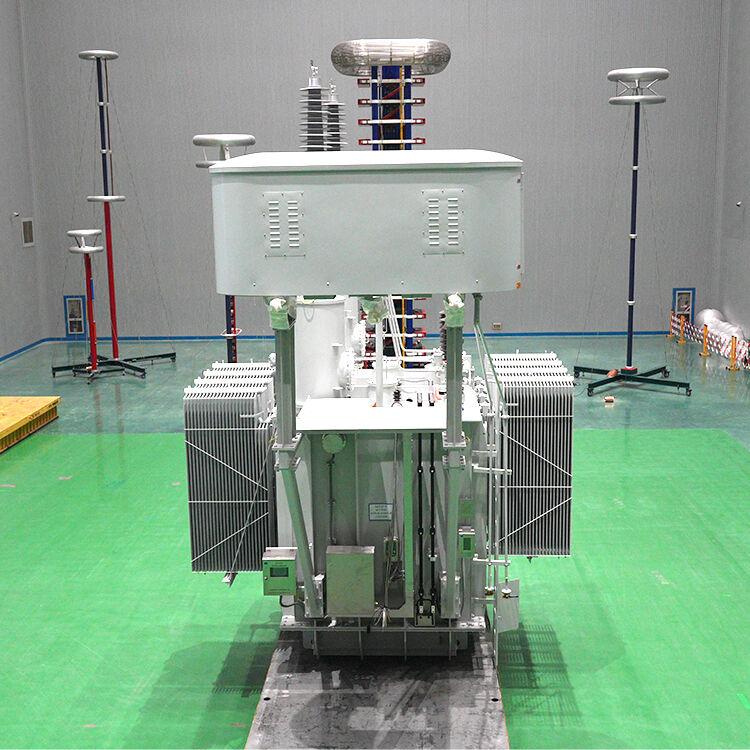
Selecting the right traction transformers for metro and rail projects is a complex engineering decision that directly impacts system reliability, operational efficiency, and long-term maintenance costs. Unlike standard power transformers, traction transformers must handle dynamic loads, frequent voltage fluctuations, and harsh environmental conditions inherent to railway electrification systems. The selection process involves careful evaluation of electrical specifications, mechanical robustness, thermal performance, and compliance with international railway standards. Engineers must balance technical requirements with project constraints such as space limitations, weight restrictions, and budget considerations while ensuring seamless integration with existing or planned traction power supply systems.
The methodology for choosing traction transformers begins with a comprehensive assessment of the specific railway system architecture, including voltage levels, power demand profiles, and network topology. Metro systems operating on DC networks typically require transformers that convert high-voltage AC from the utility grid to lower AC voltages before rectification, while mainline railways may use AC traction systems requiring different transformer configurations. Project planners must conduct detailed load calculations accounting for peak demand scenarios, acceleration profiles of rolling stock, and simultaneous train operations across multiple track sections. This article explains the systematic approach engineers use to evaluate and select appropriate traction transformers, covering technical evaluation criteria, operational considerations, testing requirements, and integration challenges specific to urban metro and intercity rail infrastructure projects.
Understanding System Requirements and Load Characteristics
Analyzing Power Demand and Voltage Level Requirements
The foundation of traction transformer selection lies in accurately determining the power demand characteristics of the railway system. Engineers must calculate the maximum continuous power requirement based on the number of trains operating simultaneously, their traction motor ratings, and auxiliary power consumption for lighting, HVAC, and control systems. Metro systems with frequent station stops exhibit pulsating load patterns with high peak demands during acceleration phases, requiring traction transformers capable of handling these transient conditions without thermal stress or voltage instability. The primary voltage level from the utility grid connection and the secondary voltage required for the traction system establish the fundamental transformer ratio, which must align with standardized railway electrification voltages such as 750V DC, 1500V DC, 3000V DC, or 15kV/25kV AC depending on regional standards and system design.
Load profile analysis extends beyond simple power calculations to include consideration of regenerative braking energy, which modern rolling stock feeds back into the catenary system. This bidirectional power flow capability requires traction transformers designed to handle reverse power flow without operational issues. Engineers develop detailed duty cycle profiles that map typical operational scenarios throughout a service day, identifying worst-case loading conditions that define the transformer's thermal rating requirements. The selection process must account for future capacity expansion, with many projects specifying transformers with 20-30% overload capacity to accommodate network growth without premature equipment replacement. Temperature rise characteristics under sustained overload conditions become critical selection parameters, particularly for substations with limited ventilation or those installed in underground facilities common to metro systems.
Evaluating Network Configuration and Topology
Railway electrification systems employ various network topologies that significantly influence traction transformer specifications. In metro applications, substations are typically spaced at intervals of 1-3 kilometers along the route, with each substation serving a defined electrical section. The transformer selection must consider whether the system uses unilateral feeding from a single substation or bilateral feeding from adjacent substations, as this affects short-circuit current levels and protection coordination requirements. For AC railway systems, the choice between single-phase and three-phase power supply impacts transformer winding configurations, with many mainline railways using single-phase traction transformers connected in rotation across the three phases of the utility supply to maintain reasonable balance. The impedance characteristics of traction transformers play a crucial role in limiting fault currents and ensuring proper coordination with protection devices throughout the traction power supply network.
The integration of traction transformers within the broader substation architecture requires careful consideration of connection schemes and earthing arrangements. Engineers must specify appropriate vector groups for transformer windings to ensure compatibility with existing network infrastructure and prevent circulation of zero-sequence currents that could interfere with track circuits used for train detection and signaling. For projects involving multiple substations feeding a common catenary system, the paralleling capability of traction transformers becomes essential, requiring matched impedances and voltage regulation characteristics to ensure proper load sharing. The physical location of substations also influences selection, as urban metro projects often require compact traction transformers that fit within constrained footprints in basement installations or alongside elevated track structures, while rural mainline railways may accommodate larger outdoor-type transformers with conventional tank designs.
Determining Environmental and Installation Conditions
Environmental factors specific to railway applications impose unique requirements on traction transformer design and selection. Metro systems frequently install substations in underground tunnels or basement facilities with limited ventilation, necessitating transformers with enhanced cooling systems or dry-type construction that eliminates fire hazards associated with oil-filled units. The ambient temperature range at the installation site affects thermal design, with tropical locations requiring derating or enhanced cooling capacity compared to temperate climates. Altitude considerations become relevant for mountain railways, as reduced air density at elevations above 1000 meters decreases cooling efficiency and requires specific design adjustments or power derating. Seismic activity in earthquake-prone regions mandates traction transformers with reinforced structural designs and specialized mounting arrangements that can withstand specified horizontal and vertical accelerations without damage or loss of structural integrity.
Pollution levels and atmospheric conditions at the installation site influence external insulation requirements and protective coatings for traction transformers. Coastal locations with salt-laden air, industrial areas with chemical contaminants, or desert environments with sand and dust require enhanced bushings, protective finishes, and sealed tank designs to prevent degradation over the transformer's expected 30-40 year service life. Noise emission limits become critical selection parameters for substations located near residential areas or within noise-sensitive urban environments, requiring traction transformers with sound-dampening enclosures or specialized core and tank designs that minimize audible noise below regulatory thresholds. The available space for installation, including height clearances, access requirements for maintenance, and crane capacity for future replacement, all factor into the physical dimensions and weight specifications that constrain transformer selection options for specific project sites.
Evaluating Technical Specifications and Performance Parameters
Assessing Electrical Performance Characteristics
The electrical performance specifications of traction transformers extend well beyond basic power rating and voltage ratio to encompass parameters critical for railway operation. Voltage regulation under varying load conditions directly affects the available voltage at the pantograph or third rail, impacting train acceleration performance and energy consumption. Traction transformers with low impedance provide better voltage regulation but generate higher short-circuit currents, while higher impedance units limit fault currents but may cause excessive voltage drop during peak loads. Engineers must optimize this trade-off based on the specific network characteristics and protection system capabilities. The transformer's ability to maintain voltage stability during rapid load changes, such as when multiple trains simultaneously accelerate, requires adequate short-circuit strength and minimal reactance variation under transient conditions. No-load losses and load losses determine the overall efficiency of the traction power supply system, with modern specifications typically requiring efficiency levels above 98% at rated load to minimize operational energy costs over the transformer's lifecycle.
Harmonic performance represents another critical evaluation criterion for traction transformers, as power electronic converters in modern rolling stock inject significant harmonic currents into the supply system. Transformer designs must accommodate these harmonic components without excessive heating or resonance conditions that could damage insulation or interfere with signaling systems. The K-factor rating or equivalent harmonic capability specification indicates the transformer's suitability for non-linear loads characteristic of railway applications. For AC railway systems using thyristor or IGBT-based converters, the transformer must handle asymmetrical loading and DC components in the secondary current without core saturation issues. Inrush current characteristics during energization also require evaluation, as substations may need to be energized quickly during service restoration scenarios, and excessive inrush currents could cause nuisance tripping of upstream protection devices or damage to the transformer itself if switching transients are not properly managed.
Evaluating Thermal Design and Cooling Systems
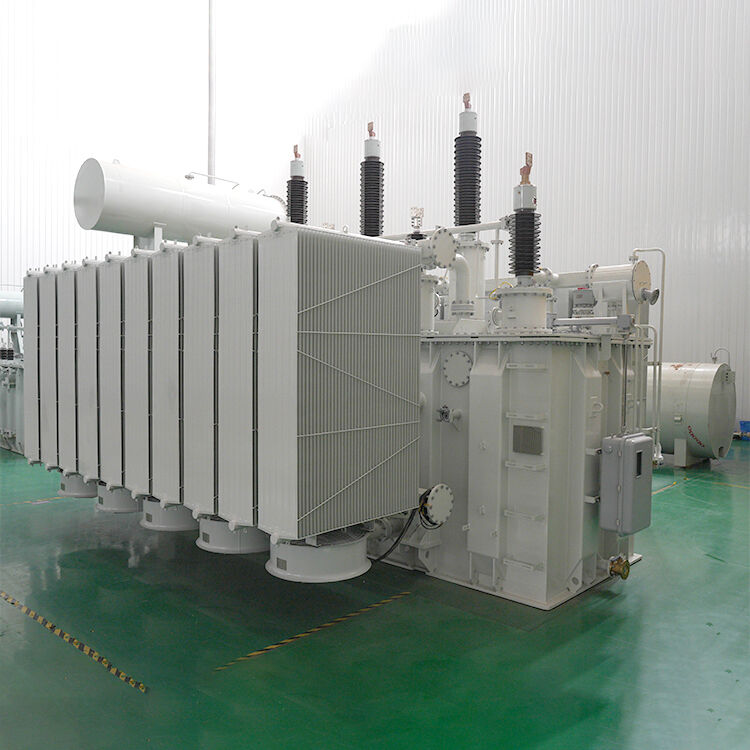
Thermal management capabilities fundamentally determine the operational reliability and lifespan of traction transformers in demanding railway applications. The thermal design must accommodate the cyclic loading patterns typical of metro systems, where transformers experience frequent transitions between high loads during peak traffic periods and lighter loads during off-peak hours. Engineers evaluate the transformer's thermal time constant, which indicates how quickly the unit heats up under load and cools down during idle periods, ensuring adequate thermal margin during worst-case operational scenarios. The insulation class and temperature rise limits specified for windings and oil define the thermal stress levels the transformer can sustain, with Class A or Class F insulation systems common in railway applications depending on the cooling method and expected ambient conditions. Modern traction transformers increasingly employ sophisticated cooling systems with forced air or forced oil circulation to enhance heat dissipation in compact designs required for space-constrained metro substations.
The choice between oil-immersed and dry-type traction transformers significantly impacts thermal performance and installation requirements. Oil-immersed designs offer superior cooling efficiency and generally provide better overload capability for a given size, making them preferred for high-power mainline railway applications where space is less constrained. However, fire safety concerns in underground metro installations often necessitate dry-type transformers using cast resin or vacuum pressure impregnated insulation systems that eliminate flammability risks. These dry-type units require more sophisticated thermal design to achieve equivalent power ratings in similar physical envelopes compared to oil-filled alternatives. The cooling system reliability becomes critical, as cooling system failures can rapidly lead to thermal runaway conditions damaging expensive transformer assets. Redundant cooling fans, temperature monitoring with multiple sensors, and automatic load shedding capabilities represent essential features for traction transformers in critical railway infrastructure where unplanned outages disrupt passenger service and generate significant economic losses.
Analyzing Mechanical Robustness and Structural Integrity
Mechanical design requirements for traction transformers exceed those of typical industrial transformers due to the vibration, shock, and dynamic forces encountered in railway environments. Although traction transformers are stationary equipment installed in substations rather than on rolling stock, they must withstand structural vibrations transmitted through building foundations from passing trains, particularly in underground metro installations where substations are integrated into tunnel structures. The core clamping system, winding support structures, and internal bracing must maintain integrity under these continuous low-level vibrations over decades of service life. For seismically active regions, traction transformers require qualification testing to demonstrate they can survive earthquake events with specified horizontal and vertical acceleration levels without structural failure, loss of dielectric integrity, or displacement from mounting foundations. The tank and radiator structures must possess adequate mechanical strength to resist deformation during transportation, installation, and operational stresses including internal pressure variations from thermal cycling.
Short-circuit withstand capability represents perhaps the most demanding mechanical requirement for traction transformers, as railway networks can experience high-magnitude fault currents from catenary system short circuits or equipment failures. The electromagnetic forces generated during short-circuit events can reach tens of times normal operating forces, imposing severe mechanical stresses on transformer windings and internal structures. Engineers must verify that candidate traction transformers have been tested and certified to withstand the maximum available short-circuit current at the installation point of the network, typically requiring certification according to international standards specifying test procedures and acceptance criteria. The cumulative effect of multiple short-circuit events throughout the transformer's service life requires design margins that prevent progressive mechanical degradation. Bushing mechanical strength also requires careful evaluation, as external forces from catenary system movements or maintenance activities can impose lateral loads on high-voltage bushings that could cause cracking or seal failures if inadequately designed for railway environments.
Compliance with Standards and Testing Requirements
Applying International Railway and Transformer Standards
Traction transformer selection must ensure full compliance with the complex matrix of international standards governing railway electrification equipment and power transformers. The IEC 60310 standard specifically addresses traction transformers and inductors for rolling stock, though its principles also inform stationary traction transformer design. General power transformer standards such as IEC 60076 series establish baseline design, testing, and performance requirements that apply to traction transformers with additional railway-specific requirements overlaid. Engineers must verify that candidate transformers meet the relevant sections of these standards, including temperature rise limits, dielectric strength requirements, impulse voltage withstand levels, and short-circuit withstand capability. Regional standards variations exist, with North American projects often referencing IEEE and ANSI standards while European and Asian projects typically follow IEC standards, requiring project specifications that clearly identify which standard regime applies and how conflicting requirements should be resolved.
Railway-specific standards addressing electromagnetic compatibility, fire safety, and operational reliability impose additional constraints on traction transformer selection. EMC standards limit electromagnetic emissions from traction transformers to prevent interference with sensitive signaling and communication systems essential for safe railway operations. Fire safety standards, particularly relevant for metro systems, may mandate specific insulation materials, fire barriers, or automatic fire suppression systems for substations containing oil-filled traction transformers. Standards governing power quality parameters establish permissible levels of voltage harmonics, unbalance, and flicker that the traction power supply system can inject into the utility grid, requiring transformer designs with appropriate filtering or harmonic mitigation capabilities. For international projects or systems using imported rolling stock, ensuring compatibility across multiple national standards regimes becomes essential, often requiring traction transformers certified to the most stringent applicable standards from multiple jurisdictions to ensure regulatory approval and operational compatibility.
Specifying Factory Acceptance Tests and Performance Verification
Comprehensive factory acceptance testing represents a critical stage in the traction transformer selection and procurement process, providing objective verification that delivered equipment meets specified performance parameters. Standard routine tests performed on all units include measurement of voltage ratio, impedance, load losses, no-load losses, and insulation resistance to verify basic electrical characteristics match design specifications. Applied voltage tests verify dielectric strength of insulation systems, while induced voltage tests at higher than rated frequency confirm inter-turn insulation integrity in transformer windings. Temperature rise tests under sustained load conditions verify that the thermal design maintains winding and oil temperatures within specified limits under rated and overload conditions, providing assurance that the cooling system performs adequately for the anticipated duty cycle. These routine tests establish the baseline performance of each individual traction transformer and detect manufacturing defects before equipment is shipped to the project site.
Type tests performed on representative samples from a production series provide additional assurance of design adequacy for demanding railway applications. Lightning impulse voltage tests verify that traction transformers can withstand transient overvoltages from lightning strikes or switching operations without insulation failure. Short-circuit withstand tests subject the transformer to the maximum prospective fault current for specified duration, then verify through subsequent electrical tests that no mechanical damage or performance degradation has occurred. Sound level measurements under no-load and load conditions verify compliance with noise emission limits critical for urban installations. Partial discharge measurements detect minor insulation defects that could propagate over time, providing early warning of potential reliability issues. Special tests may include evaluation of harmonic losses under non-sinusoidal current conditions, measurement of zero-sequence impedance for protection coordination, or seismic qualification testing for installations in earthquake zones. The test protocols and acceptance criteria must be clearly defined in procurement specifications, with witness points allowing project engineers to observe critical tests and verify compliance before accepting delivery of traction transformers for installation.
Ensuring Long-Term Reliability and Maintenance Considerations
Reliability considerations fundamentally influence traction transformer selection, as unplanned failures disrupt passenger service and impose significant economic penalties on railway operators. Engineers evaluate the manufacturer's quality management systems, production track record, and installed base performance data when selecting suppliers for critical traction transformers. Design features that enhance reliability include conservative thermal loading, high-quality insulation materials with proven long-term stability, robust bushing designs with adequate mechanical strength and sealing integrity, and comprehensive protection systems including temperature monitoring, pressure relief devices, and gas detection systems for early fault warning. The expected service life of traction transformers typically extends 30-40 years, requiring design practices and material selections that minimize aging degradation processes such as insulation deterioration, core lamination loosening, or contact erosion in tap changers if fitted. Redundancy strategies at the system level, such as N+1 substation configurations where loss of any single transformer does not interrupt service, provide additional reliability assurance but impose cost penalties that must be balanced against service criticality.
Maintenance requirements and accessibility significantly impact lifecycle costs and should influence transformer selection decisions. Traction transformers designed with accessible terminals, clear identification of test points, and provision for online monitoring facilitate routine inspections and preventive maintenance activities. Oil-immersed units require periodic oil sampling and analysis to monitor insulation condition, moisture content, and dissolved gas levels that indicate incipient faults, necessitating adequate sampling valves and access for maintenance personnel. Dry-type traction transformers eliminate oil maintenance but require regular inspection and cleaning of insulation surfaces to prevent tracking from accumulated contamination. The availability of spare parts, particularly for specialized components such as tap changers, cooling fans, or control panels, represents an important selection consideration, as obsolescence of critical parts can force premature replacement of otherwise functional transformers. Comprehensive technical documentation including detailed drawings, test reports, maintenance manuals, and troubleshooting guides enables effective maintenance practices throughout the transformer's operational life. Projects may specify requirements for operator training, commissioning support, and ongoing technical assistance from the manufacturer to ensure maintenance teams possess adequate knowledge and capability to maintain traction transformers at optimal performance levels throughout their intended service life.
Integration with Protection Systems and Control Architecture
Coordinating Protection Schemes and Relay Settings
The integration of traction transformers within the broader substation protection system requires careful coordination of protective relays and fault detection schemes. Primary protection typically includes differential relays that compare current entering and leaving the transformer to detect internal faults, with appropriate settings to discriminate between fault currents and normal magnetizing inrush or load transients. Overcurrent protection on both primary and secondary sides provides backup protection and must be coordinated with upstream utility protective devices and downstream catenary protection systems. The impedance characteristics of traction transformers directly influence fault current magnitudes and thus protection relay settings, requiring accurate transformer impedance data at various tap positions if on-load or off-load tap changers are fitted. Time-current coordination studies ensure that faults are cleared by the protective device closest to the fault location while maintaining adequate backup protection in case primary devices fail to operate. The protection philosophy must accommodate the unique characteristics of railway systems, including high inrush currents when energizing long catenary sections and the potential for transient overloads during multiple train acceleration events.
Specialized protection functions address specific failure modes relevant to traction transformers in railway applications. Buchholz relays or sudden pressure relays detect internal faults in oil-immersed transformers through gas accumulation or pressure waves generated by arcing, providing fast fault detection with high sensitivity to incipient failures. Temperature monitoring with multiple sensors throughout the transformer enables thermal overload protection and early warning of cooling system failures or abnormal loading conditions. Restricted earth fault protection detects low-magnitude ground faults within transformer windings that might not be detected by conventional overcurrent relays. For traction transformers supplying rectifier equipment in DC railway systems, protection schemes must account for the DC component in fault currents and asymmetrical loading conditions that can affect relay operation. The protection system design must also consider cyber security for digital relays and communication interfaces, as traction power supply substations represent critical infrastructure vulnerable to potential cyber attacks that could disrupt railway operations. Protection coordination extends beyond the individual transformer to encompass the entire traction power supply network, requiring system-level studies that account for multiple substations, varying network configurations, and operational modes including maintenance scenarios where portions of the system may be isolated.
Implementing Monitoring and Control Systems
Modern traction transformers integrate with sophisticated monitoring and control systems that enable remote operation, condition monitoring, and predictive maintenance practices. Basic monitoring functions include measurement of transformer loading, voltage levels, temperatures at multiple points, and status indications for cooling equipment and protection devices. Advanced condition monitoring systems continuously analyze parameters such as dissolved gas levels in transformer oil, partial discharge activity, moisture content, and winding frequency response to detect incipient failures before they progress to catastrophic faults. These monitoring systems transmit data to centralized control centers where operators can assess the health status of traction transformers across the entire railway network and schedule maintenance interventions during planned service windows rather than responding to emergency failures. Integration with substation automation systems enables remote control of transformer energization, load transfer between substations, and coordination with utility supply switching for optimal network configuration under varying operational conditions.
The communication architecture for traction transformer monitoring must align with the railway's overall supervisory control and data acquisition system, typically using standard protocols such as IEC 61850 for substation automation or DNP3 for legacy systems. Cyber security measures including encrypted communications, authentication mechanisms, and network segmentation protect against unauthorized access to critical control systems. Data analytics capabilities enable trending of performance parameters over time, allowing identification of gradual degradation patterns that indicate approaching end-of-life or need for refurbishment. Integration with asset management systems provides a comprehensive view of transformer lifecycle including installation date, maintenance history, test results, and remaining service life estimates based on loading history and condition assessment data. The control architecture must provide appropriate redundancy and fail-safe modes such that communication system failures or control center outages do not compromise the basic protective functions or operational capability of traction transformers. Local control and indication at the substation level remain essential for maintenance activities and emergency operations when remote systems are unavailable, requiring human-machine interfaces that provide clear status information and safe manual control capabilities.
Addressing Future Expansion and Technology Evolution
Traction transformer selection must anticipate future railway system evolution and technological developments that may affect loading patterns or operational requirements. Metro systems commonly experience ridership growth over time, requiring expansion of train fleet size and frequency that increases power demand beyond initial design levels. Specifying traction transformers with adequate overload capacity or designing substations with space provisions for additional transformer units enables cost-effective capacity expansion without major infrastructure modifications. The transition toward energy-efficient rolling stock with regenerative braking capabilities affects traction transformer loading profiles, as regenerated energy flowing back through transformers to adjacent traction loads or utility grid connections introduces bidirectional power flow conditions that older transformer designs might not accommodate effectively. Engineers must consider compatibility with emerging technologies such as energy storage systems that may be integrated into traction power supply systems to capture regenerative braking energy or provide voltage support during peak loading events, requiring traction transformers capable of interfacing with battery systems or supercapacitor installations.
The evolution toward higher voltage AC railway systems for improved efficiency on mainline routes may require transformer replacement or modification strategies as networks transition from 15kV to 25kV electrification systems. Climate change considerations influence transformer selection through requirements for enhanced resilience to extreme weather events, flooding risks, or elevated ambient temperatures that exceed historical design parameters. Sustainability criteria increasingly factor into selection decisions, with lifecycle environmental impact assessments considering materials sourcing, manufacturing energy consumption, operational efficiency, and end-of-life recyclability of traction transformers. The emergence of digital twins and advanced simulation tools enables more sophisticated transformer selection processes that model specific railway operational scenarios and predict performance under various future conditions, reducing uncertainty in long-term investment decisions. Flexibility in transformer design, such as provision for tap changer retrofits or cooling system upgrades, provides options to adapt installed equipment to changing requirements rather than premature replacement, improving the economic and environmental sustainability of railway electrification infrastructure.
FAQ
What is the typical power rating range for traction transformers used in metro systems?
Metro system traction transformers typically range from 1 MVA to 4 MVA per unit, depending on the substation spacing, train frequency, and rolling stock power requirements. Urban metros with closely spaced substations at 1-2 kilometer intervals generally use smaller transformers in the 1-2.5 MVA range, while systems with longer substation spacing may require 3-4 MVA units. The total installed capacity at a substation often includes multiple transformer units for redundancy, with common configurations using two transformers each rated for 60-80% of peak load to provide N+1 redundancy. Heavy metro systems with larger train consists and higher acceleration rates require larger traction transformers compared to light metro or automated people mover systems.
How do traction transformers differ from standard distribution transformers?
Traction transformers are specifically engineered for railway applications with several key differences from standard distribution transformers. They must handle highly dynamic loads with rapid fluctuations as trains accelerate and brake, requiring robust thermal designs and mechanical structures capable of withstanding frequent load cycling. The harmonic content from power electronic converters in modern rolling stock necessitates K-factor rated designs or equivalent harmonic handling capability not required in typical distribution applications. Traction transformers often feature specialized vector groups and winding configurations optimized for single-phase railway loads rather than balanced three-phase distribution. They must withstand higher short-circuit currents characteristic of railway catenary systems and integrate with railway-specific protection schemes. Environmental specifications for traction transformers account for installation in tunnels, along tracks, or in space-constrained urban substations with unique ventilation and noise constraints compared to typical distribution transformer applications.
What maintenance activities are required for oil-immersed traction transformers?
Oil-immersed traction transformers require periodic maintenance including annual oil sampling and laboratory analysis to monitor moisture content, dielectric strength, acidity, and dissolved gas levels that indicate insulation condition or incipient faults. Visual inspections check for oil leaks, bushing condition, and cooling system operation, typically performed quarterly or semi-annually depending on criticality. Thermographic surveys detect hot spots indicating loose connections or internal problems. Every 5-10 years, more comprehensive maintenance includes testing of protective relays, verification of bushing power factor, and resistance measurements of windings and grounding connections. Major overhauls at 15-20 year intervals may include oil filtering or replacement, internal inspection if condition monitoring indicates concerns, and gasket replacement. Cooling system maintenance includes cleaning of radiators, verification of fan operation, and oil pump inspection for units with forced circulation. Maintaining detailed maintenance records enables trending of parameters over time to predict when refurbishment or replacement becomes necessary.
Can existing traction transformers be upgraded to handle increased power demand?
Upgrading existing traction transformers to handle increased power demand depends on the specific design margins and loading conditions. Transformers originally specified with conservative thermal ratings may accommodate modest load increases through revised operating procedures that accept higher but still acceptable temperature rises. Enhanced cooling systems such as adding forced air fans to natural convection designs or increasing oil circulation rates can improve heat dissipation and effectively increase the power handling capability within thermal limits. However, fundamental constraints such as winding current density and core flux density cannot be altered without extensive rebuilding essentially equivalent to new transformer manufacture. In most cases, capacity expansion beyond 15-20% of original rating proves more economical through installation of additional transformers rather than attempting to upgrade existing units. Modern traction transformers increasingly incorporate provisions for future cooling system enhancement during initial design, providing a practical upgrade path for anticipated load growth without oversizing the initial installation.
Table of Contents
- Understanding System Requirements and Load Characteristics
- Evaluating Technical Specifications and Performance Parameters
- Compliance with Standards and Testing Requirements
- Integration with Protection Systems and Control Architecture
-
FAQ
- What is the typical power rating range for traction transformers used in metro systems?
- How do traction transformers differ from standard distribution transformers?
- What maintenance activities are required for oil-immersed traction transformers?
- Can existing traction transformers be upgraded to handle increased power demand?