 EN
EN


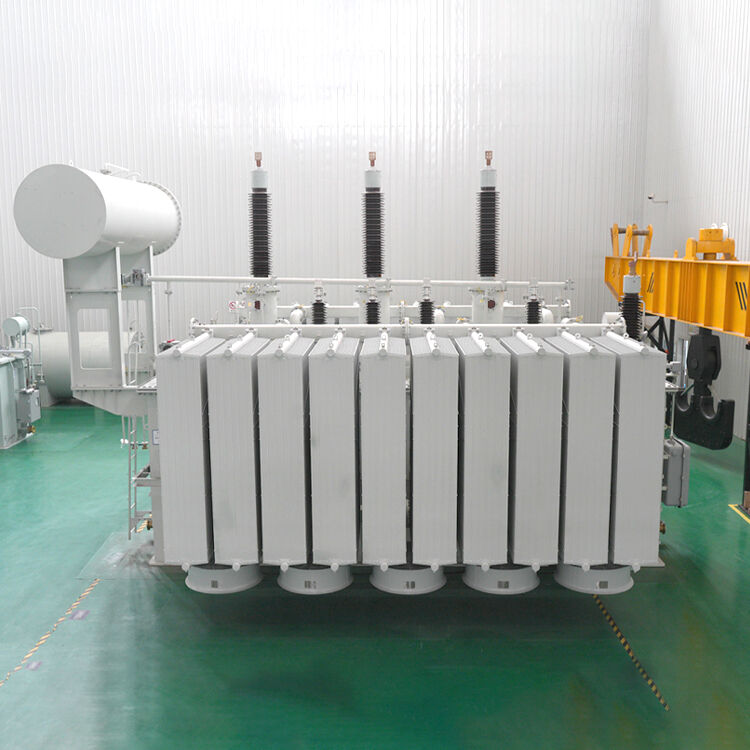
High voltage power transmission systems form the backbone of modern electrical grids, enabling electricity to travel efficiently across vast distances. At the heart of these complex networks lies the power transformer, a crucial piece of equipment that facilitates voltage conversion and ensures reliable energy distribution. Understanding how these transformers operate within high voltage transmission systems reveals the sophisticated engineering principles that keep our lights on and industries running.
The power transformer serves as a voltage converter that enables electricity to be transmitted at different voltage levels throughout the electrical grid. These devices utilize electromagnetic induction principles to step up voltage for long-distance transmission or step down voltage for local distribution. Without the power transformer, electrical energy would face significant losses during transmission, making long-distance power delivery economically unfeasible.
Fundamental Operating Principles of High Voltage Power Transformers
Electromagnetic Induction Theory
The power transformer operates on Faraday's law of electromagnetic induction, which states that a changing magnetic field induces an electromotive force in a conductor. When alternating current flows through the primary winding of a power transformer, it creates a time-varying magnetic flux in the transformer core. This changing flux links with the secondary winding, inducing a voltage proportional to the turns ratio between the primary and secondary coils.
The magnetic core of a power transformer, typically constructed from laminated silicon steel, provides a low reluctance path for magnetic flux. The core design minimizes energy losses while maximizing flux linkage between windings. High-grade electrical steel with specific magnetic properties ensures optimal performance and reduces hysteresis and eddy current losses that could otherwise compromise transformer efficiency.
Voltage Transformation Mechanics
The voltage transformation ratio of a power transformer depends directly on the turns ratio of its windings. If the primary winding has N1 turns and the secondary winding has N2 turns, the voltage relationship follows the equation V2/V1 = N2/N1. This fundamental relationship allows engineers to design power transformers for specific voltage conversion requirements in high voltage transmission systems.
Current transformation occurs inversely to voltage transformation, following the relationship I1/I2 = N2/N1, assuming ideal transformer conditions. This inverse relationship ensures power conservation, as the power input equals power output minus losses. Real-world power transformers experience small losses due to resistance, magnetic hysteresis, and eddy currents, typically ranging from 0.5% to 2% of rated capacity.
Construction Components and Design Features
Core Construction and Materials
High voltage power transformers utilize sophisticated core designs to handle massive power loads and voltage stresses. The core consists of laminated silicon steel sheets, typically 0.23mm to 0.35mm thick, arranged to minimize eddy current losses. The lamination process reduces circulating currents within the core material, significantly improving transformer efficiency and reducing heat generation.
Core configurations vary depending on power transformer ratings and applications. Shell-type cores surround the windings with magnetic material, providing excellent mechanical support and magnetic shielding. Core-type designs place windings around the core legs, offering easier manufacturing and maintenance access. Both configurations effectively channel magnetic flux while minimizing losses in high voltage applications.
Winding Systems and Insulation
The winding system of a power transformer represents one of its most critical components, requiring precise engineering to handle high voltages and currents safely. Primary and secondary windings consist of copper or aluminum conductors, chosen for their excellent electrical conductivity and mechanical properties. Conductor cross-sections are carefully calculated to handle rated currents while minimizing resistive losses.
Insulation systems in high voltage power transformers must withstand extreme electrical stresses while maintaining long-term reliability. Paper insulation, often treated with mineral oil or synthetic fluids, provides primary insulation between winding layers and turns. Pressboard barriers create additional insulation between windings and grounded components. Modern power transformers may incorporate advanced insulation materials like aramid papers or synthetic films for enhanced performance.
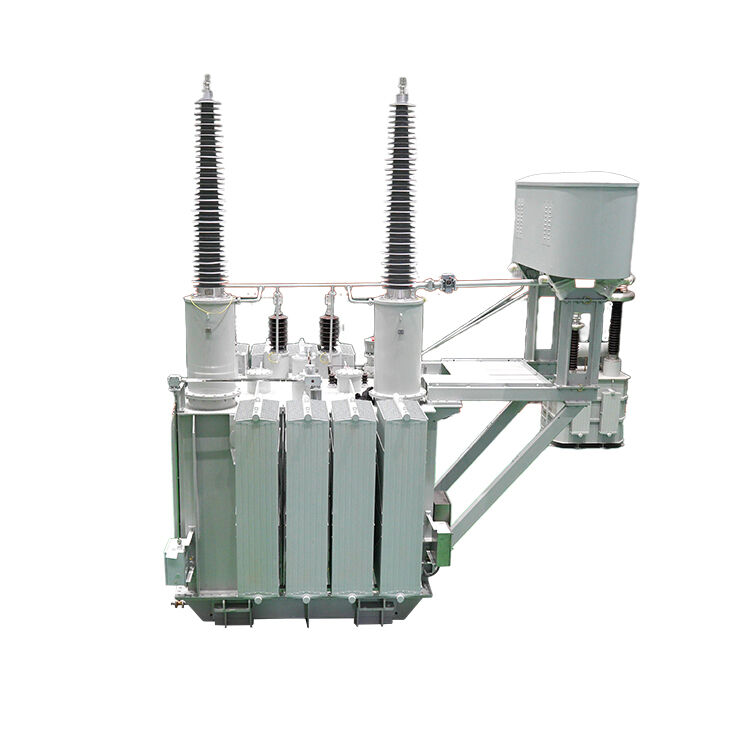
High Voltage Transmission System Integration
Step-Up Transformation Process
Generation stations utilize step-up power transformers to increase voltage levels from generator output to transmission line requirements. Typical generator voltages range from 11kV to 25kV, while transmission voltages can reach 765kV or higher. This voltage increase dramatically reduces current levels for the same power transfer, minimizing transmission losses and enabling efficient long-distance power delivery.
The power transformer at generation stations must handle the full output of large generators, often rated at hundreds of megavolt-amperes. These massive units require sophisticated cooling systems, protection schemes, and monitoring equipment to ensure reliable operation. Transformer impedance characteristics must match system requirements to provide proper short-circuit protection and voltage regulation.
Step-Down Transformation for Distribution
Distribution substations employ step-down power transformers to reduce transmission voltages to levels suitable for local distribution networks. These transformers typically convert voltages from 138kV, 230kV, or higher transmission levels down to 4kV to 35kV distribution voltages. The power transformer must maintain voltage regulation while handling varying load conditions throughout the day.
Load tap changers integrated with distribution power transformers provide voltage regulation capabilities to compensate for system voltage variations. These devices automatically adjust transformer turns ratios to maintain acceptable voltage levels at customer delivery points. Sophisticated control systems monitor system conditions and operate tap changers to optimize voltage profiles across the distribution network.
Cooling and Protection Systems
Thermal Management Solutions
High voltage power transformers generate significant heat during operation, requiring effective cooling systems to maintain safe operating temperatures. Oil-filled transformers use mineral oil or synthetic fluids as both insulation and cooling medium. The oil circulates through the transformer tank, absorbing heat from windings and core, then transfers this heat to external radiators or cooling fans.
Forced cooling systems enhance heat dissipation capacity in large power transformers. Oil pumps circulate cooling fluid through external heat exchangers, while fans provide additional air circulation over radiator surfaces. Some installations incorporate water cooling systems for maximum heat removal capacity. Temperature monitoring systems continuously track hot spot temperatures to prevent overheating damage.
Protective Relaying and Monitoring
Comprehensive protection schemes safeguard power transformers from various fault conditions that could cause catastrophic failure. Differential protection compares currents entering and leaving the transformer, detecting internal faults with high sensitivity and selectivity. Overcurrent protection provides backup protection for external faults and overload conditions.
Gas relay protection detects internal arcing or overheating by monitoring gas accumulation in oil-filled power transformers. Sudden pressure relays respond to rapid pressure increases caused by internal faults. Temperature monitoring systems track winding and oil temperatures, initiating alarms or trips when safe limits are exceeded. Modern digital protection systems integrate multiple protective functions with advanced communication capabilities.
Efficiency and Performance Characteristics
Loss Mechanisms and Mitigation
Power transformer losses consist of two main categories: no-load losses and load losses. No-load losses, also called core losses, include hysteresis and eddy current losses in the magnetic core. These losses remain constant regardless of load current and depend on applied voltage and frequency. Modern power transformers achieve core losses as low as 0.1% of rated capacity through advanced core materials and construction techniques.
Load losses, primarily copper losses in windings, vary with the square of load current. Winding resistance and eddy current losses in conductors contribute to total load losses. Stray losses in structural components and tank walls add to overall losses. High-efficiency power transformers achieve total losses below 1% of rated capacity, significantly improving system efficiency and reducing operating costs.
Voltage Regulation and Performance
Voltage regulation describes how well a power transformer maintains output voltage under varying load conditions. Transformer impedance, primarily reactance, causes voltage drops proportional to load current. Well-designed power transformers achieve regulation within 2% to 5% from no-load to full-load conditions, ensuring acceptable voltage quality for connected loads.
Power factor considerations significantly impact power transformer performance and system efficiency. Leading or lagging power factors affect voltage regulation and may require compensation equipment. The power transformer must handle reactive power flows while maintaining voltage stability. Advanced tap changing equipment helps optimize system power factor and voltage profiles.
Maintenance and Monitoring Practices
Predictive Maintenance Techniques
Modern power transformer maintenance relies heavily on condition monitoring techniques that detect developing problems before failures occur. Dissolved gas analysis examines gases dissolved in transformer oil to identify internal faults such as arcing, overheating, or insulation degradation. Regular oil testing reveals moisture content, acidity, and contamination levels that affect transformer life.
Partial discharge monitoring detects insulation deterioration in power transformers before catastrophic failure occurs. Online monitoring systems continuously track partial discharge activity, providing early warning of developing insulation problems. Thermal imaging identifies hot spots and cooling system problems that could lead to transformer damage.
Operational Monitoring Systems
Comprehensive monitoring systems track multiple parameters that indicate power transformer health and performance. Load monitoring ensures transformers operate within rated capacity while identifying loading trends. Voltage and current monitoring verifies proper operation and identifies system abnormalities that could affect transformer performance.
Digital monitoring systems integrate data from multiple sensors to provide comprehensive transformer condition assessment. These systems can predict remaining transformer life, optimize maintenance schedules, and prevent unexpected failures. Remote monitoring capabilities enable utility operators to track transformer performance from central control centers, improving system reliability and reducing maintenance costs.
Future Developments and Technology Trends
Smart Grid Integration
Advanced power transformer designs incorporate smart grid technologies that enhance monitoring, control, and communication capabilities. Intelligent electronic devices integrated with transformers provide real-time data on operating conditions, fault detection, and performance metrics. These smart transformers can communicate with grid control systems to optimize power flow and improve system efficiency.
Adaptive protection systems adjust protective settings based on real-time system conditions, improving reliability while maintaining security. Advanced analytics process transformer data to predict maintenance needs and optimize operational parameters. Integration with renewable energy sources requires power transformers capable of handling bidirectional power flows and varying generation patterns.
Material and Design Innovations
Research continues into advanced materials that can improve power transformer performance and reliability. Superconducting transformers offer the potential for significant size and weight reductions while improving efficiency. Advanced magnetic materials with improved properties could reduce core losses and improve transformer performance.
Environmental considerations drive development of eco-friendly insulation systems that replace traditional mineral oil. Natural ester fluids and synthetic alternatives offer improved fire safety and environmental compatibility. Solid insulation systems eliminate liquid coolants entirely, reducing environmental risks and maintenance requirements while maintaining high performance standards.
FAQ
What voltage levels do power transformers handle in transmission systems
Power transformers in transmission systems typically handle voltages ranging from 69kV to 765kV, with some special applications reaching even higher voltages. Step-up transformers at power plants convert generator voltages of 11kV to 25kV up to transmission levels, while step-down transformers at substations reduce transmission voltages to distribution levels of 4kV to 35kV. The specific voltage levels depend on system design requirements and regional standards.
How long do high voltage power transformers typically last
Well-maintained power transformers in transmission systems typically operate for 30 to 40 years or more, with some units exceeding 50 years of service life. Factors affecting longevity include operating conditions, maintenance quality, load characteristics, and environmental factors. Regular maintenance, proper cooling, and protection from electrical faults significantly extend transformer life. Condition monitoring helps optimize maintenance schedules and predict remaining useful life.
What are the main causes of power transformer failures
Common causes of power transformer failures include insulation deterioration due to aging, moisture, or electrical stress; winding faults caused by short circuits or mechanical damage; core problems from loose laminations or overheating; bushing failures due to contamination or flashover; and cooling system failures that lead to overheating. External factors such as lightning strikes, system faults, and contamination also contribute to transformer failures. Proper maintenance and monitoring help prevent many failure modes.
How do power transformers contribute to grid stability
Power transformers contribute to grid stability by enabling efficient voltage conversion for long-distance transmission, reducing system losses and maintaining voltage quality. They provide impedance that limits fault currents and helps maintain system stability during disturbances. Tap-changing capabilities allow voltage regulation to compensate for load variations and maintain acceptable voltage levels throughout the transmission system. Modern smart transformers provide additional grid support functions through advanced monitoring and control capabilities.
Table of Contents
- Fundamental Operating Principles of High Voltage Power Transformers
- Construction Components and Design Features
- High Voltage Transmission System Integration
- Cooling and Protection Systems
- Efficiency and Performance Characteristics
- Maintenance and Monitoring Practices
- Future Developments and Technology Trends
- FAQ