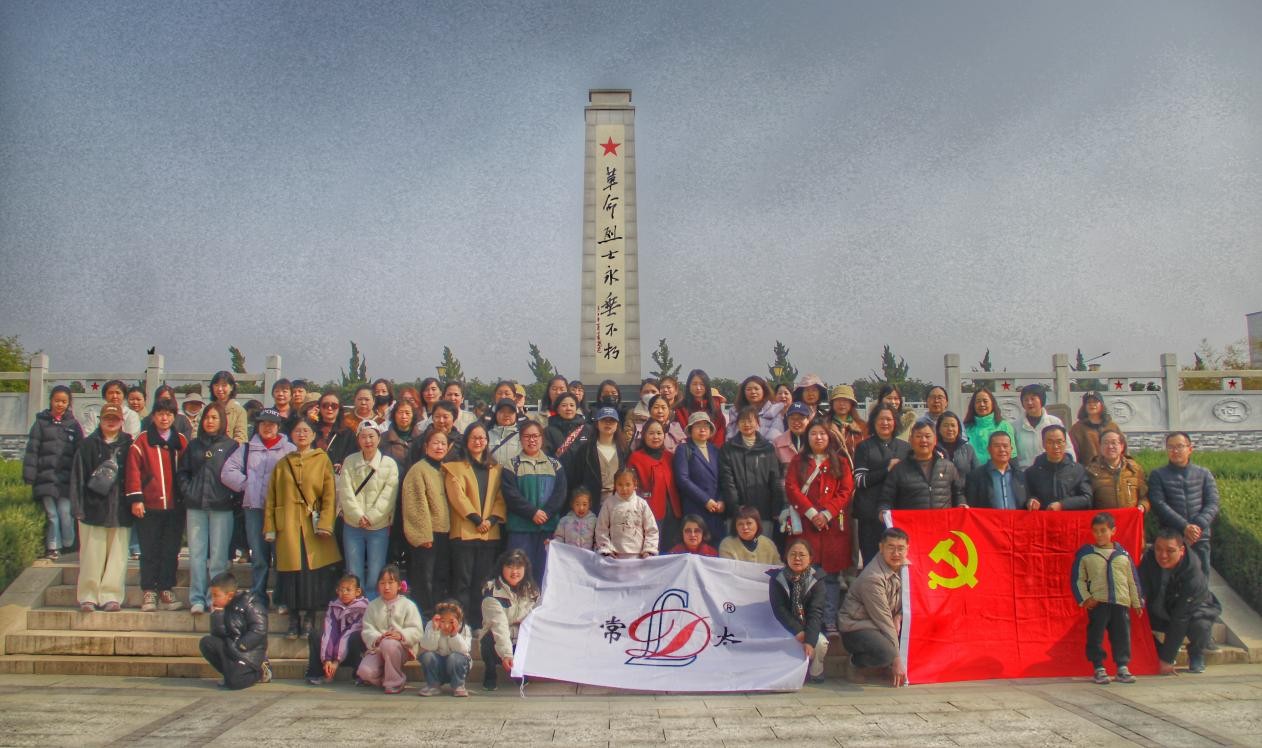
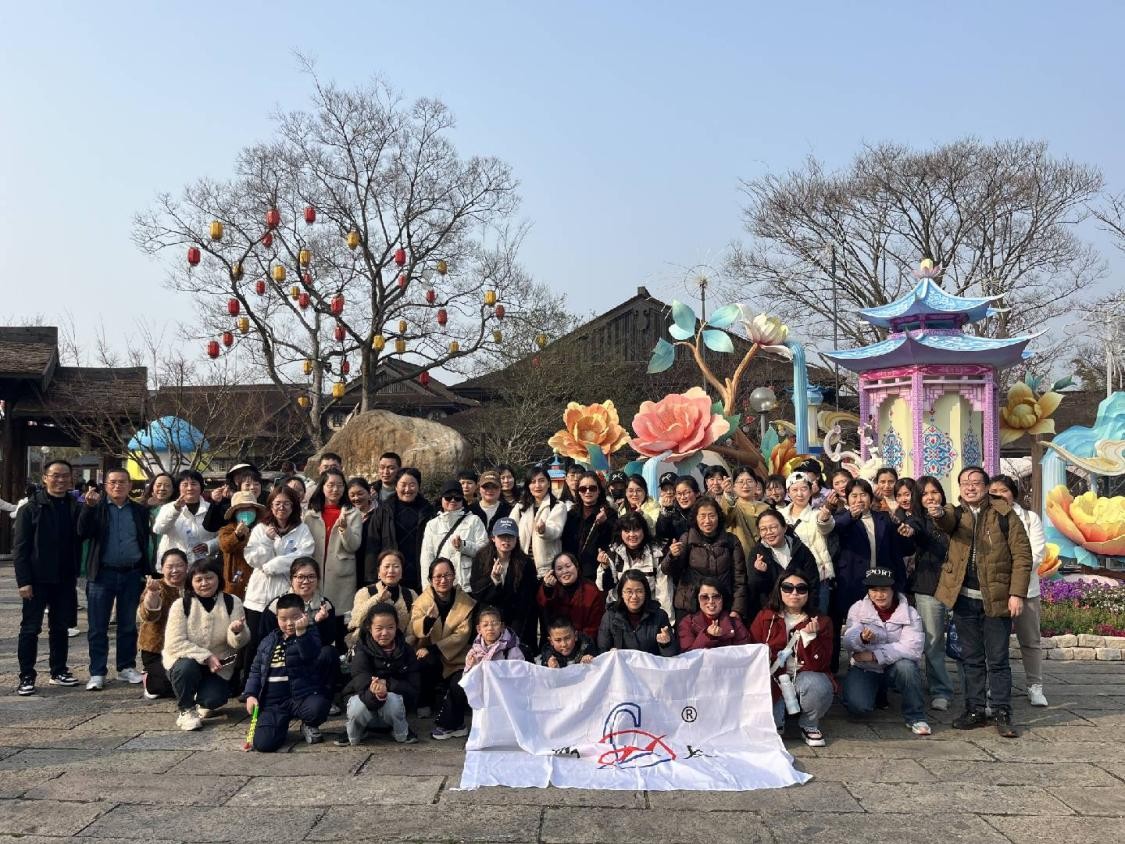
Early spring in Wuxi is steeped in the fragrance of magnolia blossoms, their creamy white petals unfurling gently under the mild March sun to greet the arrival of International Women's Day. Ninety-seven individuals—including Party members, female employees of Changtai Group, and their beloved family members—gathered at the company gate at dawn, their faces brimming with excitement as they embarked on a memorable cultural journey that wove through the city's profound history and vibrant modernity. This ancient Jiangnan city, crisscrossed by canals and adorned with blooming flowers, narrated in its unique, poetic way a story that intertwined the remarkable years of the past with the tranquil beauty of the present, paying heartfelt tribute to the women of the new era who strive fearlessly in every walk of life.
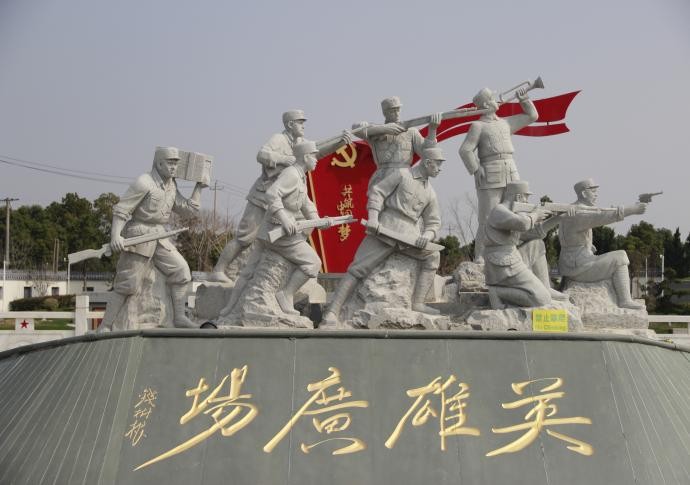
First Stop: The New Fourth Army Jiangkang Eastward Advancement Memorial Hall—Immortal Bloom in CrimsonFirst Stop: The New Fourth Army Jiangkang Eastward Advancement Memorial Hall—Immortal Bloom in Crimson
As the first rays of morning light pierced the mist over Lake Taihu, the New Fourth Army Jiangkang Eastward Advancement Memorial Hall stood solemnly at the foot of the hills, its red-brick facade exuding a sense of reverence. The gilded characters "Iron Army Advances Eastward" on its lintel shimmered in the sunlight, as if echoing the resounding battle cries of decades ago. Upon entering the hall, a solemn atmosphere enveloped the visitors, who lowered their voices and slowed their paces, showing deep respect for the heroic martyrs. The exhibition halls, adorned with old photographs, military uniforms, and wartime relics, unfolded a vivid historical scroll of the New Fourth Army's arduous eastward march.
In the central exhibition area, glass display cases housed yellowed copies of The Masses Daily, their fragile pages covered with delicate yet forceful penmanship that documented the daily life of a field hospital deep in the war zone. These were the wartime notes of Head Nurse Li Landing, a young woman in her early twenties who dedicated her life to saving the wounded. One passage, slightly blurred by time, described how she stayed awake for three consecutive days and nights to nurse 17 critically injured soldiers, her hands swollen from constant bandaging yet never faltering. Beside the notes lay a well-worn bamboo medicine box, its surface marked with scratches from countless marches, a silent witness to the hardships she endured.
On the interactive touch screens nearby, a lifelike 3D image of female soldiers weaving straw sandals came to life. The visitors leaned in, captivated by the scene: the young women, their faces tanned by the sun and wind, sat in a circle, their skilled fingers deftly manipulating coarse straw. The straw flew between their palms, gradually taking shape into sturdy, durable straw sandals that would carry the soldiers through muddy trenches and rugged mountain roads. "These straw sandals were more than just footwear," explained the memorial guide, a young woman in a blue cheongsam. "They were woven with the women's love and hope, a tangible expression of their support for the revolutionary cause."
The most moving moment came before the holographic projection of the "Jiangkang Heroines." The 360-degree projection vividly reenacted the thrilling scene of 16-year-old medic Xiao Wang leaping into the icy river to protect a box of precious medicines. As the projection showed Xiao Wang struggling against the swirling currents, her thin figure buffeted by the waves yet clinging tightly to the medicine box, quiet sobs escaped from some visitors. A middle-aged female employee of Changtai Group, wiping away her tears, whispered to her daughter beside her: "These young heroines were around your age, but they had the courage to sacrifice everything for the country. We must always remember their contributions." These young women, with an average age of under 20, used their youth and blood to build an immortal monument on the shores of Lake Taihu, their spirit like crimson flowers blooming endlessly in the annals of history.
Second Stop: Nanchang Street—Fingertip Heritage by the Millennium-Old Canal
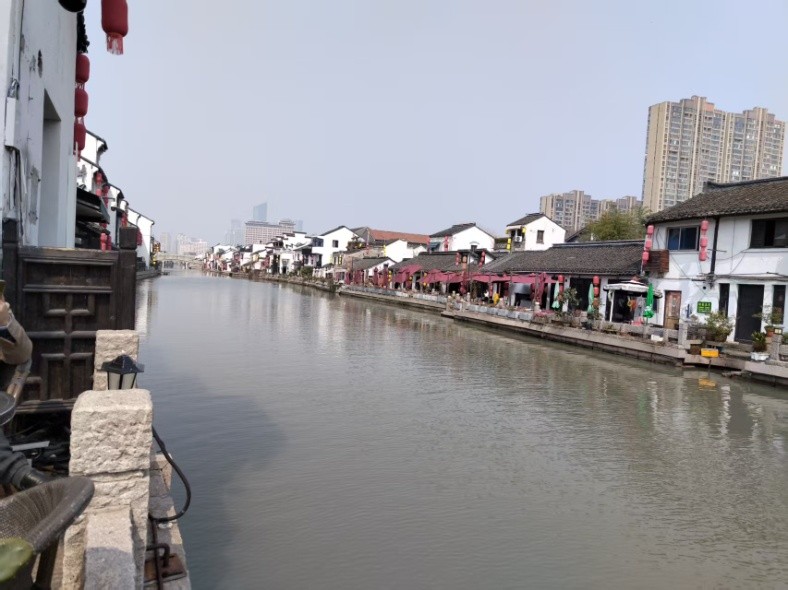
By noon, the group arrived at Nanchang Street, a bustling ancient street that has thrived by the Grand Canal for over a thousand years. The street, lined with black-tiled roofs and whitewashed walls, awoke to the gentle ripples of the canal, where wooden boats glided slowly by, their oars creating concentric circles on the water's surface. The air was filled with the enticing scents of local delicacies—sweet taro soup, crispy fried dough twists, and savory dumplings—wafting from the small stalls and shops that lined the bluestone-paved road. The visitors' spirits lifted as they immersed themselves in the lively, warm atmosphere of this ancient commercial street, a perfect blend of tradition and modernity.
Their first stop on the street was the Huishan Clay Figurine workshop near Qingming Bridge, a renowned studio dedicated to preserving the intangible cultural heritage of Huishan clay sculpture. Inside the workshop, shelves were filled with exquisitely crafted clay figurines—smiling children, elderly scholars, and lively folk characters—each with distinct expressions and vivid details. Provincial-level intangible cultural heritage inheritor Aunt Wang, a warm-hearted woman in her sixties with silver hair tied in a bun, greeted the visitors warmly and began teaching them how to knead and shape the "Silkworm Cat," a traditional clay figurine symbolizing good fortune for silkworm-raising families in Jiangnan.
"This chubby little fellow is the guardian deity of Jiangnan silkworm-raising women," Aunt Wang explained, holding up a finished Silkworm Cat with bright eyes and a round belly. "In the old days, silkworms were the lifeline of many families here. The Silkworm Cat was believed to ward off mice and protect the silkworms, ensuring a good harvest." She demonstrated how to knead the clay into a smooth ball, then press and shape it into the cat's body, head, and limbs. The visitors followed her lead, some laughing as their clay creations turned out lopsided at first, but gradually improving with Aunt Wang's patient guidance. A young female employee named Zhang Li, holding her slightly uneven but beloved Silkworm Cat, said: "It's my first time making clay figurines. It's not easy, but I feel a deep sense of connection to our traditional culture through this hands-on experience."
Further down the street, a group of young women in elegant Suzhou embroidery cheongsams gathered at a Wuxi Embroidery studio, eager to experience the "Twelve Needle Techniques of Wuxi Embroidery," a delicate and intricate embroidery art with a history of over 2,000 years. The embroidery masters, all experienced women, handed each visitor a piece of silk fabric and a silver needle, teaching them basic stitches step by step. The visitors concentrated intently, their eyes fixed on the fabric as the silver needles weaved in and out, gradually bringing to life faint outlines of peonies—Jiangnan's favorite flower, symbolizing prosperity and beauty. "Wuxi Embroidery is famous for its delicate stitches and vivid patterns," said Master Chen, the studio's owner. "Many of our embroidery works depict the beauty of Jiangnan, and they are all created by women's skilled hands. This art form is a precious heritage passed down from generation to generation of Jiangnan women."
As the afternoon sun slanted through the eaves, the soft melodies of Pingtan storytelling floated out from a centuries-old teahouse by the canal. The visitors walked in, ordered cups of fragrant Longjing tea, and sat quietly, listening to the storyteller—a middle-aged woman with a clear, melodious voice—sing the legend of Taibo Fleeing to Wu in authentic Wu dialect. The dialect, with its gentle tones and unique intonations, held the codes of a three-thousand-year-old civilization, transporting the listeners back to the ancient times when Taibo established the Wu state and laid the foundation for Jiangnan's cultural prosperity. After the performance, many visitors chatted with the storyteller, curious about the history behind the legend and the art of Pingtan.
At the time-honored "Mù Guìyīng" rice cake shop, a local brand with a history of over 150 years, the fifth-generation heir—Ms. Mu, a cheerful woman in her forties—taught the children in the group how to make three-colored qingtuan rice balls. The shop was filled with the fresh fragrance of mugwort, which is mixed with glutinous rice flour to make the green skin of the qingtuan. Ms. Mu demonstrated how to knead the glutinous rice dough, wrap it around sweet fillings of red bean paste, sesame, and osmanthus, and then shape it into round balls. The children, their hands covered in flour, laughed and played as they tried to copy her, creating quirky yet adorable qingtuan. "Qingtuan is a traditional snack for Qingming Festival, but it's also a symbol of spring and new life," Ms. Mu said. "By teaching the children to make qingtuan, we hope to pass down these folk memories and let them cherish our traditional culture." As a sub-venue for the 2025 Spring Festival Gala, Nanchang Street had broadcast its millennia of history and culture to every corner of the world via the big screen, and today, it continued to write new stories of cultural inheritance with the participation of these visitors.
Third Stop: Nianhua Bay—Poetic Dwelling in a Shower of Cherry Blossoms
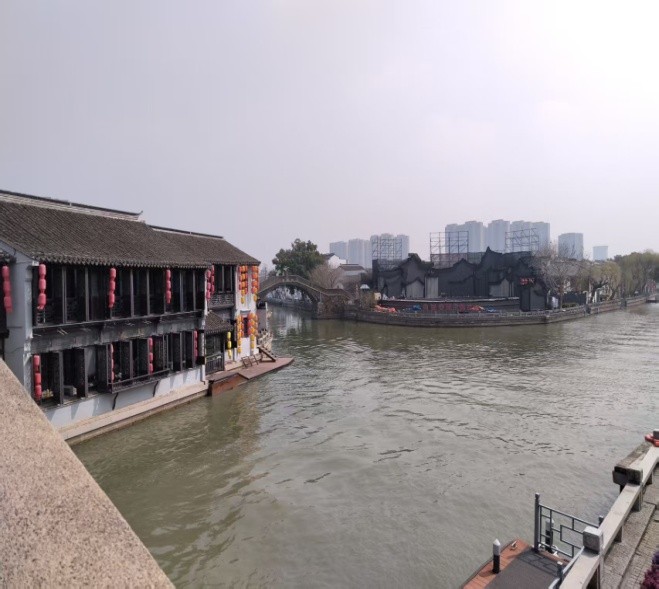
As dusk fell, the group arrived at Nianhua Bay, a scenic spot modeled after the Tang Dynasty's architectural style, nestled among rolling hills and cherry blossom groves. Dusk draped the bay in a veil of pale purple, casting a soft glow over the Tang-style wooden structures, curved eaves, and stone lanterns. Under the eaves, wind chimes tinkled gently with the evening breeze, their melodious sounds blending with the rustle of cherry blossom petals, creating a serene and poetic atmosphere. The early cherry blossoms in Luming Valley had already bloomed into clouds of pink and white, their petals drifting down like a light snowfall, covering the paths and the heads of the visitors.
Many young women in the group picked up fallen cherry blossom petals, carefully placing them into small bamboo baskets to make cherry blossom sachets. They sat on stone benches under the cherry trees, chatting and laughing as they filled small silk bags with petals, adding a few drops of essential oil to enhance the fragrance. "These sachets are not only beautiful but also carry the scent of spring," said a young employee, holding up her finished sachet adorned with a red ribbon. "I want to give it to my mother as a gift, to thank her for her hard work."
In the Zen-inspired inn at the heart of the bay, a tea master in a traditional Hanfu demonstrated the elegant Song dynasty tea-whisking techniques. The visitors gathered around, watching intently as she heated the tea bowl with hot water, added fine tea powder, and whisked it vigorously with a bamboo tea whisk. The tea froth gradually formed, white and smooth like freshly fallen snow, and the master skillfully drew delicate patterns on the surface of the froth—a cherry blossom, a bird, a mountain—eliciting exclamations of admiration from the onlookers. Each visitor was then given a chance to try tea-whisking themselves, their hands trembling slightly at first but gradually becoming steady. The warm, fragrant tea slid down their throats, calming their minds and making them feel fully immersed in the peaceful Zen atmosphere.
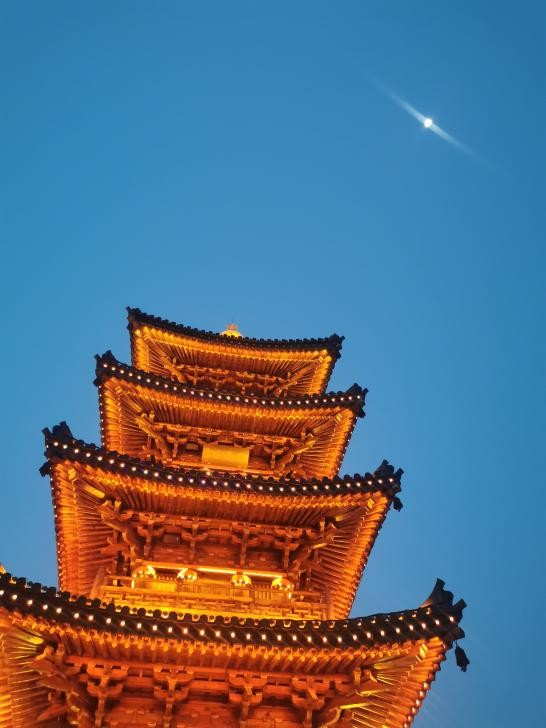
As night fell, the entire Nianhua Bay was illuminated by soft, warm lights, turning it into a fairy-tale world. The highlight of the night came when the lights of the Nianhua Pagoda were turned on, casting a golden glow into the sky. Suddenly, a drone fleet soared into the air, transforming into a flowing galaxy of light. The drones moved in perfect unison, forming various patterns—a blooming cherry blossom, a group of women holding hands, the Chinese character for "Beauty"—and finally spelling out "Salute to Her Power" in the night sky. The visitors looked up, their faces lit up by the dazzling lights, and burst into enthusiastic applause. "This is absolutely amazing!" exclaimed one visitor, taking photos frantically with her phone. "It's the most unforgettable part of the journey."
At the open-air theater by the lake, the live performance Zen Journey began as scheduled. The performance, combining dance, music, and water screen projection, depicted the Dunhuang dream of heavenly maidens scattering flowers, with graceful dancers in flowing costumes moving like butterflies on the stage. As the music reached its climax, silhouettes of outstanding women from Chinese history—such as Qiu Jin, the fearless revolutionary fighter, and Lin Huiyin, the renowned architect and writer—emerged from the water screen, their figures overlapping with those of modern women in various professions: doctors, teachers, scientists, athletes. The performance was a magnificent symphony of history and the present, paying tribute to the indomitable spirit and outstanding contributions of women throughout the ages. Many visitors were deeply moved, their eyes filled with tears of emotion and pride.
Return Journey
As the performance ended, the group boarded the buses to return, their hearts full of memories and emotions. The headlights of the returning vehicles cut through the night over Lake Taihu, their beams reflecting on the calm water, while the starlight outside the windows interwove with the city's neon glow, creating a beautiful and tranquil scene. On the buses, the visitors chatted excitedly, sharing their favorite moments of the day—the touching stories of the female martyrs in the memorial hall, the fun of making clay figurines and qingtuan on Nanchang Street, the poetic beauty of cherry blossoms and the stunning drone show in Nianhua Bay.
This day was more than just a simple outing; it was a profound cultural immersion and a heartfelt tribute to women. The visitors not only enjoyed the beautiful scenery of Wuxi's early spring but also retrieved forgotten women's stories from the long river of time, touching the pulse of traditional culture in the collision of tradition and modernity. They felt the strength and courage of the heroines of the past, the wisdom and perseverance of the inheritors of traditional crafts, and the elegance and confidence of the women of the new era.
History is never far away; it lives in every relic, every craft, and every story, transforming into a powerful force that nurtures the present. This cultural journey inspired every female participant to cherish the present, strive fearlessly, and let every ordinary day blossom with its own unique radiance. As the buses approached the city center, the laughter and chatter of the visitors still echoed, a beautiful melody that celebrated women's power and the beauty of spring.
Changtai Group Party, Labor Union, and Youth League

Changzhou Pacific Electric Power Equipment (Group) Co., Ltd. provides high/low voltage power transmission equipment, traction transformers (110–330kV), and pad-mounted/package substations for global energy infrastructure. ISO-certified, R&D-driven since 1989. Request a technical consultation today.
Environmental Protection Fourth Road, Environmental Protection Industrial Park, Tongjiang Avenue, XinBei District, Changzhou City, Jiangsu Province
Copyright © 2026 Changzhou Pacific Electric Equipment (Group) Co., Ltd. All rights reserved. Privacy Policy
 EN
EN